Why Is My Water Heater Not Heating Water in Belleville, Illinois
A tank water heater that stops heating may have a pilot, ignition, thermostat, or heating fault. This guide explains the patterns in general terms, without gas or electrical handling steps.
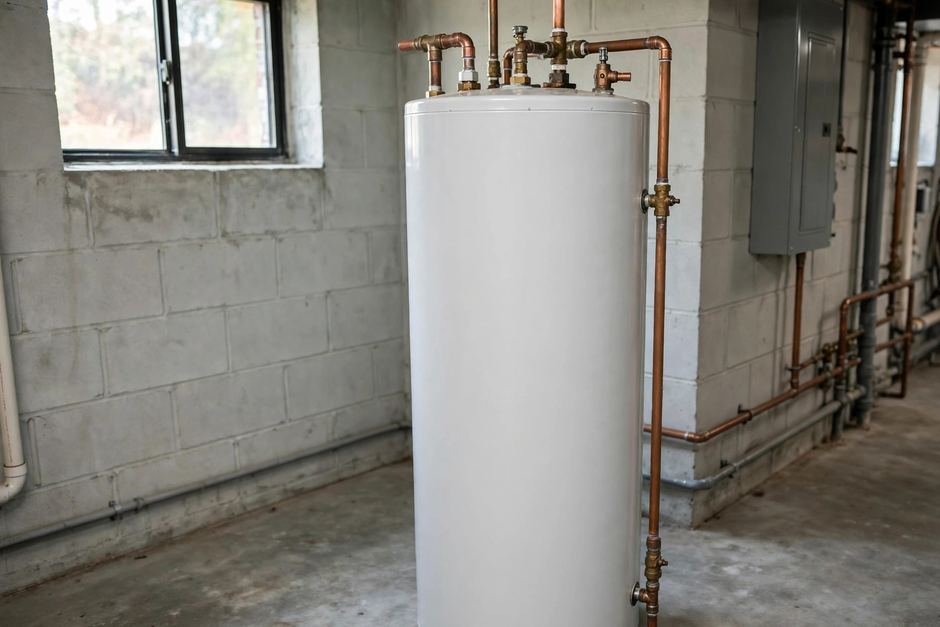
When hot water stops, the pattern of the failure carries the useful detail. No hot water at all, lukewarm water, and hot water that runs out early each point to different parts of the heater. Water heater repair for tank heaters starts by matching the pattern to pilot, ignition, thermostat, or heating faults. This guide describes those patterns in general terms only.
Gas and electrical controls are not homeowner handling points. If gas smell is present, leave the building and call Ameren Illinois at 1-800-755-5000 or 911 first, from a safe distance. Plumbing work in Illinois is restricted under the Illinois Plumbing License Law (225 ILCS 320), and the homeowner exception covers single-family owner-occupant homes only.
How a Tank Water Heater Heats Water
A tank water heater stores heated water and holds it ready for use. Gas models heat through a burner below the tank, lit by a pilot light or electronic ignition, while electric models heat through elements inside the tank. A thermostat senses water temperature and calls for heat when stored water cools, keeping the tank ready between uses.
Stored water cools gradually even without use, so the heater cycles through heating periods across the day. Mineral scale and sediment settle inside the tank over time and insulate heating surfaces, which changes how evenly and how fully water heats. Tank condition, heating parts, and controls all shape whether hot water stays steady.
No Hot Water, Lukewarm Water, and Early Runout
No hot water at all suggests the heating source never starts, which points to pilot, ignition, thermostat, or power and gas supply causes. Lukewarm water suggests heating starts but never completes, which points to thermostat sensing, partial heating, or scale and sediment limiting heat transfer. Early runout, where hot water starts strong and fades, suggests stored capacity or a heating part that stops mid-cycle.
Noting which pattern fits, and whether the change was sudden or gradual, helps narrow the fault before any panel is opened. Sudden loss after a period of normal heating differs from gradual fading over weeks, and the distinction guides the plumber toward controls, heating parts, or tank condition. Observation of pattern and timing is the homeowner contribution here.
Pilot and Ignition Faults in General Terms
In gas heaters with a standing pilot, a flame that goes out leaves the burner unable to light, so stored water cools and hot water stops. Drafts, a weakening sensor near the flame, debris at the pilot opening, and gas supply interruptions can all extinguish the flame. Electronic ignition systems fail differently, with igniter, sensor, or control faults rather than a flame going out.
This guide gives no step-by-step gas instructions and describes no handling of gas controls. If gas smell is present, leave the building and call Ameren Illinois at 1-800-755-5000 or 911 first, from a safe distance. Pilot and ignition assessment belongs with a plumber, who can inspect burner and control parts without homeowner gas handling.
Thermostat and Heating Element Faults in General Terms
The thermostat senses stored water temperature and signals when heating should start and stop. A thermostat that misreads temperature can stop heating too early, producing lukewarm water, or fail to call for heat at all. No temperature setting is stated in this guide, and thermostat adjustment is not described here as a homeowner step.
Electric heaters use heating elements that can fail or become coated with scale, reducing heat transfer into stored water. Element and thermostat faults share symptoms, including lukewarm water and early runout, so the two causes need testing to separate. Electrical compartments stay closed to homeowners, and element or thermostat work belongs with a plumber.
Scale, Sediment, and Tank Condition
Mineral scale and sediment build inside tanks as water heats and cools, settling at the bottom and coating heating surfaces. Scale can cause rumbling or popping sounds during heating, reduce heating evenness, and shorten the useful service of heating parts. Discolored hot water and reduced flow at hot taps can accompany heavy buildup, though each symptom has other causes as well.
Tank condition itself matters. Rust-colored water, water pooling at the tank base, and damp flooring near the heater suggest tank or connection faults beyond heating parts. Leak detection helps separate a tank leak from a connection or valve leak, since the location of water decides the next step. A leaking tank is a replacement discussion, not a heating adjustment.
When to Call for Water Heater Help
Call for help when hot water stops entirely, when lukewarm water persists, when runout arrives early, when sounds or discoloration accompany heating, or when water appears at the tank base. Plumbing work in Illinois is restricted under the Illinois Plumbing License Law (225 ILCS 320), and the homeowner exception covers single-family owner-occupant homes only. Gas and electrical controls stay untouched while help is arranged.
The City of Belleville requires a permit before plumbing work begins (§152.05(A)); direct replacement of a toilet, sink, faucet, or other appliance is exempt, except hot water heaters require an electrical or gas permit (§152.05(B)(3)). Replacement decisions therefore carry permit framing that repair decisions may not. Water heater installation discussions should include that framing from the start.
Frequently Asked Questions
Why is there no hot water at all?
No hot water at all suggests the heating source never starts, pointing to pilot, ignition, thermostat, or supply causes. Noting whether the loss was sudden or gradual helps narrow the fault. Gas smell means leaving and calling Ameren Illinois at 1-800-755-5000 or 911 first, before any plumbing discussion.
Why is the water only lukewarm?
Lukewarm water suggests heating starts but never completes, which points to thermostat sensing, partial heating, or scale and sediment limiting heat transfer. The pattern differs from no hot water at all, where heating never starts. Testing separates thermostat, heating part, and tank condition causes, and no setting is stated here.
Why does hot water run out early?
Early runout, where hot water starts strong and fades, suggests stored capacity limits or a heating part that stops mid-cycle. Scale and sediment can reduce usable capacity and heating evenness, while thermostat faults can end heating early. Pattern and timing observations help the plumber narrow the cause.
Does scale affect how a tank heats water?
Mineral scale and sediment settle inside the tank and coat heating surfaces, which changes how evenly and how fully water heats. Rumbling sounds during heating, discolored hot water, and reduced flow at hot taps can accompany heavy buildup. No figure is stated here, and buildup is one cause among several.
When does a heater fault mean replacement?
Replacement enters the discussion when the tank itself leaks, when heating parts no longer match available components, or when faults return after repair. Hot water heater replacement carries permit framing, requiring an electrical or gas permit under City rules. A plumber can frame the repair-or-replace choice for the heater in question.
Get Help With a Water Heater That Is Not Heating in Belleville
For help with a water heater that is not heating in Belleville, Illinois, call Hinkle Plumbing Company at (618) 677-6556 during office hours, Monday through Friday, 8:00 AM to 4:30 PM. The office at 1610 W Main St, Belleville, IL 62220, is closed Saturday and Sunday. Note whether water is cold, lukewarm, or running out early.
If gas smell is present, leave the building and call Ameren Illinois at 1-800-755-5000 or 911 first, from a safe distance. Do not handle gas or electrical controls while waiting. Outside office hours, a gas smell still means leaving and calling the utility first, while a heating fault without smell waits for office hours.