Why Is My Drain Gurgling and How to Fix It in Belleville, Illinois
A gurgling drain means air is moving through traps and pipes as water drains. This guide explains vent and partial-clog causes, what to observe across fixtures, and when gurgling points to the main line.
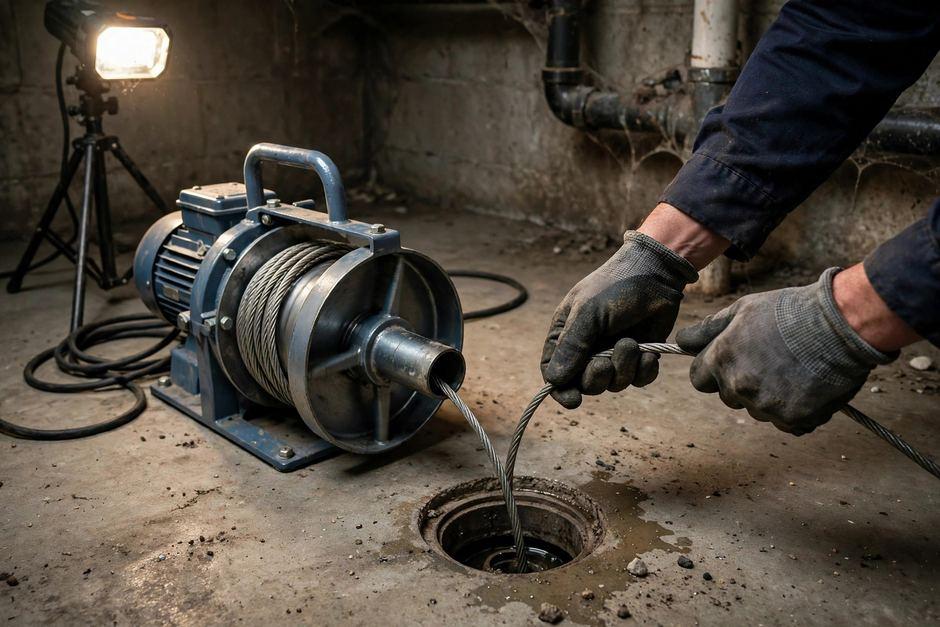
Gurgling sounds from a drain usually mean air is being pulled or pushed through water in a trap as wastewater moves. The sound itself is a symptom, not a diagnosis, and its meaning depends on whether one fixture gurgles or several do. Drain cleaning often follows when gurgling traces to a partial clog rather than a vent issue.
Plumbing work in Illinois is restricted under the Illinois Plumbing License Law (225 ILCS 320), and the homeowner exception covers single-family owner-occupant homes only. The checks here are observation across fixtures and simple steps at the sink. Work on vents, traps, or drain lines belongs with a plumber, and this guide marks that boundary.
What Gurgling Sounds Mean
Every fixture drain holds a trap, a curved section that keeps a water seal against sewer gas while letting wastewater pass. When water drains, air must move to take its place or escape ahead of it, and that air normally travels through vent piping. Gurgling happens when air instead bubbles through trap water, making the sound that draws attention to the drain.
The sound alone does not name the cause. A partial clog can force air through a trap, a vent restriction can starve the system of air, and a main line problem can push air back through the lowest fixtures. Pattern matters more than volume, so observing which fixtures gurgle, and when, gives the useful detail.
Vents and How They Affect Drains
Vent piping gives the drainage system a path for air, letting water flow smoothly and keeping trap seals intact. When a vent path is restricted, draining water pulls air through the nearest trap instead, which produces gurgling and can weaken the water seal. A weakened seal lets sewer odor enter the room, so gurgling with odor points toward the vent side of the system.
Vent restrictions come from debris, nesting material, ice in cold weather, and damage to vent piping. This guide describes vent function only and gives no instruction for clearing vents, which involves roof access and work on vent piping. Vent assessment belongs with a plumber who can inspect the system without homeowner roof work.
Checks a Homeowner Can Make
Observation across fixtures is the homeowner contribution. Note which fixtures gurgle, whether gurgling follows flushing, laundry, or shower use, whether drainage runs slow at the same time, and whether odor accompanies the sound. A single gurgling fixture with normal drainage elsewhere suggests a local cause, while several fixtures gurgling together suggests a shared line.
Simple sink steps include clearing strainers and checking that traps hold water after a period without use, since a dry trap lets air and odor pass without resistance. Running water at a seldom-used fixture restores the trap seal. Beyond those steps, the work moves to a plumber, including any vent or drain line investigation.
- Which fixtures gurgle and when
- Whether drainage runs slow at the same time
- Whether odor accompanies the sound
Partial Clogs and Gurgling Across Fixtures
A partial clog narrows a drain line without blocking it fully, so water still passes while air movement turns irregular. Gurgling at one fixture when another drains is a classic partial-clog pattern, because water from the draining fixture pushes air ahead of it through the narrowed section. The fixture that gurgles may sit downstream of the clog rather than at it.
Sewer camera inspection shows whether a partial clog, buildup, or pipe defect sits in the shared line. Camera evidence prevents treating the gurgling fixture when the cause sits further down the system. Clearing without seeing inside the line can miss the narrowing that keeps producing the sound. Evidence first keeps the fix aimed at the true cause.
When Gurgling Points to the Main Line
Gurgling at the lowest fixtures, combined with slow drainage across the home and water rising in a tub or shower when a toilet flushes, points toward the main line rather than a single branch. Main line causes include partial blockages, root intrusion, and pipe defects that restrict flow for the whole home. Those causes need assessment beyond household observation.
A main line problem can progress to sewer backup if flow restriction worsens, so early attention matters when several fixtures show symptoms together. Reducing water use while waiting for help limits the load on the restricted line. Sewage odor or water rising at fixtures means the matter should not wait for a convenient time.
When to Call About a Gurgling Drain
Call for help when several fixtures gurgle together, when gurgling pairs with slow drainage or odor, when water rises at fixtures, or when gurgling persists after strainer clearing and trap checks. Plumbing work in Illinois is restricted under the Illinois Plumbing License Law (225 ILCS 320), and the homeowner exception covers single-family owner-occupant homes only. Vent and drain line work belongs with a plumber.
Before calling, note the fixture pattern, the timing relative to flushing and laundry, and whether odor or rising water accompanies the sound. Those observations help the plumber decide whether camera inspection, drain work, or vent assessment comes first. A clear pattern description shortens the diagnostic path considerably and avoids repeating checks already made at home.
Frequently Asked Questions
Why does only one drain gurgle?
A single gurgling fixture with normal drainage elsewhere suggests a local cause, such as a partial clog in that branch or a trap that loses its seal. Clearing the strainer and checking the trap water level are reasonable homeowner steps. Persistent gurgling at one fixture still deserves plumber assessment if it continues.
Why do several drains gurgle at once?
Several fixtures gurgling together suggest a shared line cause, such as a partial clog in a common drain or a main line restriction. Water from one fixture pushes air through traps at other fixtures when the shared path narrows. Camera inspection shows whether the cause sits in a shared line or the main line.
Can a blocked vent cause gurgling?
A restricted vent path can cause gurgling, because draining water pulls air through the nearest trap when vent air is unavailable. Gurgling with sewer odor points toward the vent side, since a weakened trap seal lets odor enter. Vent assessment belongs with a plumber, and this guide gives no vent clearing instruction.
Does gurgling always mean a clog?
Gurgling does not always mean a clog. Vent restrictions, dry traps at seldom-used fixtures, and main line issues can all produce the sound. Pattern observation separates the causes, including which fixtures gurgle, when the sound follows other water use, and whether drainage runs slow at the same time.
When is gurgling a sewer backup warning?
Gurgling at the lowest fixtures with slow drainage across the home, water rising in a tub when a toilet flushes, and sewage odor together suggest a main line problem that can progress to backup. Reducing water use while waiting for help limits load on the restricted line. Those combined signs should not wait.
Get Help With a Gurgling Drain in Belleville
For help with a gurgling drain in Belleville, Illinois, call Hinkle Plumbing Company at (618) 677-6556 during office hours, Monday through Friday, 8:00 AM to 4:30 PM. The office at 1610 W Main St, Belleville, IL 62220, is closed Saturday and Sunday. Describe which fixtures gurgle and whether drainage runs slow.
Water rising at fixtures or sewage odor alongside gurgling points to a main line matter that deserves attention during the next office hours. Outside office hours, reducing water use limits load on the restricted line. Note the fixture pattern before calling so the description stays clear.