Why Does My Toilet Keep Running After Flushing in Belleville, Illinois
Running after flushing means the tank never reaches its resting state. This guide separates flapper, fill valve, overflow, and handle causes, and explains the observations that narrow the fault.
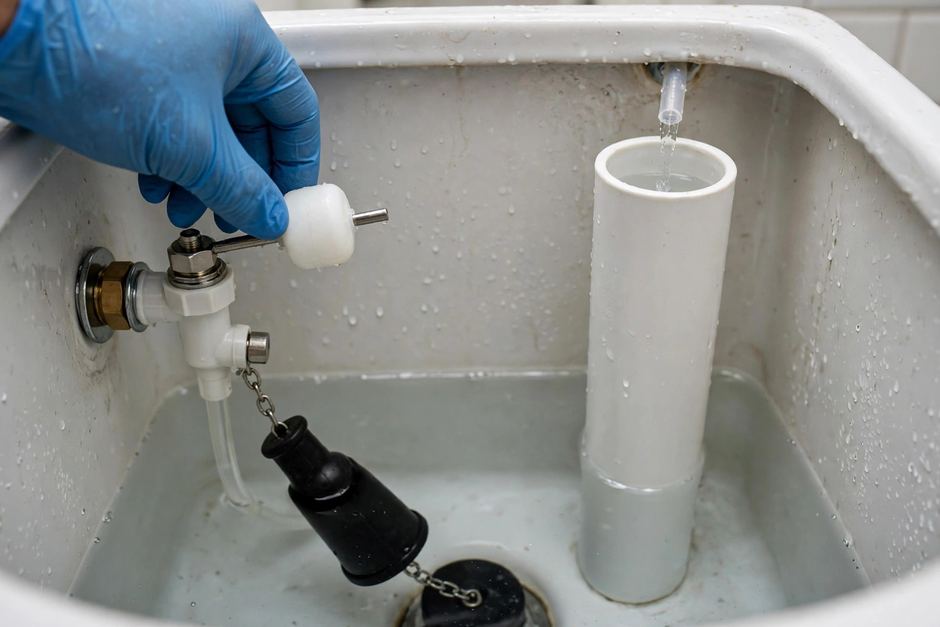
A toilet that keeps running after flushing is still moving water from tank to bowl, or still refilling a tank that never fills. The sound continues because the cycle never reaches its resting point, and water use climbs while the fault persists. Toilet repair for running toilets starts by naming which tank part fails to finish its job.
The tank holds a small set of parts that work in sequence, so running narrows to a short list of causes. Flapper sealing, fill valve shutoff, overflow level, and handle linkage each leave a distinct pattern. Watching one full cycle with the lid lifted usually shows which pattern fits the toilet in question.
How a Flush Cycle Finishes
A flush cycle finishes when the flapper seals the tank opening, the fill valve refills the tank to its level, and the fill valve shuts off. The handle returns to rest, the chain hangs with slack, and the water surface sits still. Running means one of those finishing steps fails, so water keeps moving through the tank, the bowl, or both.
Timing helps narrow the fault. Running that starts right after flushing and continues without pause differs from running that starts between flushes after a quiet period. The first pattern points to a part that never completes its step, while the second points to a seal that leaks slowly until the fill valve restarts. Noting the timing before lifting the lid adds useful detail.
Flapper Causes of Running
The flapper seals the opening between tank and bowl, and running follows when that seal leaks. Rubber ages, stiffens, and loses its flexible edge, while mineral deposits roughen the seat or the flapper edge. A flapper that sits off-center, folds, or catches on the chain leaves a gap that passes water without stopping.
Flapper leaks often show as running that starts between flushes, when the tank level drops enough for the fill valve to restart. The bowl may show a faint ripple at the rim while the tank refills. Chain faults mimic flapper wear, so chain slack deserves observation before the flapper is blamed, since both faults pass water the same way.
Fill Valve Causes of Running
The fill valve refills the tank and shuts off when the water level reaches its stop point. A fill valve that will not shut off keeps refilling, and excess water spills into the overflow tube, so the sound never stops. Hissing through refilling, a level that climbs toward the tube top, and a valve that sticks all point to the fill side.
Fill valve faults differ from flapper faults in timing. Fill valve running usually starts with the flush and continues without a quiet gap, because the valve never completes shutoff. Flapper running more often cycles, with quiet periods between refills. Watching whether the level reaches the overflow tube separates the two causes during one observed cycle.
Overflow Level and Handle Linkage
The overflow tube sets the ceiling for tank water, and a level that reaches the tube top spills water into the bowl without stopping. Level problems trace to fill valve settings or fill valve faults rather than to the flapper. The reference point is the tube top itself, with the resting level sitting below it after refilling completes.
Handle linkage causes running when the handle sticks, the lever binds, or the chain holds the flapper open after the flush. A handle that needs jiggling to settle, a lever that stays lifted, and a chain without slack all leave the flapper open. Plumbing repairs for linkage faults address the handle, lever, and chain as one connected assembly.
Water Use and Signs Beyond the Tank
Running toilets raise water use steadily, since water passes through the tank and bowl without serving a flush. The increase shows over time rather than in a single day, and a toilet that runs without pause keeps passing water, though this guide states no volume figure. Stopping the running restores normal use without any other change to household habits.
Signs beyond the tank point elsewhere. Water at the floor around the base suggests a seal or supply fault rather than a tank part, and damp flooring near the toilet deserves attention before it spreads. Leak repair covers base and supply faults, while tank parts explain running without floor water. Naming the location of water narrows the work.
When to Call for a Running Toilet
Call for help when running continues after flapper, chain, and level checks, when the fill valve will not shut off, when water appears at the base or floor, or when a shutoff valve resists turning. Plumbing work in Illinois is restricted under the Illinois Plumbing License Law (225 ILCS 320), and the homeowner exception covers single-family owner-occupant homes only. Work beyond observation and minor adjustment belongs with a plumber.
Before calling, note the timing pattern, the water level relative to the overflow tube, and whether floor water is present. Those observations help the plumber narrow the fault to flapper, fill valve, linkage, or a seal beyond the tank. A running toilet deserves attention before water use climbs further and floor damage takes hold.
Frequently Asked Questions
How do flapper and fill valve faults differ?
Flapper faults leak water from tank to bowl, often cycling with quiet periods between refills as the level drops and the fill valve restarts. Fill valve faults keep refilling without a quiet gap, with the level climbing toward the overflow tube. Watching one full cycle and the resting level separates the two causes.
Does jiggling the handle fix a running toilet?
Jiggling the handle sometimes settles a sticking lever or a chain that holds the flapper open, which stops running for that cycle. Repeated need for jiggling points to a linkage fault that needs attention, including a binding lever or chain length that no longer suits the flapper. The pattern matters more than any single success.
What does water at the floor mean with a running toilet?
Water at the floor around the base points to a seal or supply fault rather than a tank part alone. Base seals, supply connections, and tank bolts sit outside the flapper and fill valve sequence. Floor water deserves attention before flooring damage spreads, and the location of water helps narrow the work.
What water level should the tank show at rest?
The resting water level should sit below the top of the overflow tube, so water does not spill into the tube after refilling. A level that reaches the tube top points to a fill valve setting or fault. The tube top is the reference point, and no measurement is stated in this guide.
When is toilet replacement considered instead of repair?
Replacement enters the discussion when tank parts no longer match available components, when porcelain cracks, or when repeated faults return after repair. Direct replacement of a toilet is exempt from the City permit requirement as written, with hot water heaters carrying a separate permit exception. A plumber can frame the repair-or-replace choice for the toilet in question.
Get Help With a Toilet That Keeps Running in Belleville
For help with a toilet that keeps running in Belleville, Illinois, call Hinkle Plumbing Company at (618) 677-6556 during office hours, Monday through Friday, 8:00 AM to 4:30 PM. The office at 1610 W Main St, Belleville, IL 62220, is closed Saturday and Sunday. Note the timing pattern and the resting water level before calling.
Water at the floor or a fill valve that will not shut off points beyond simple tank adjustments. Shutting off water at the fixture shutoff, where the valve turns without forcing, limits water use while help is arranged. Outside office hours, that shutoff is the holding step until office hours return.