Sewer Line Repair vs. Replacement Cost in Belleville, Illinois
Spot repair fixes a localized fault, while replacement addresses a line that fails along its length. This guide compares the two approaches, the camera evidence that decides between them, and trenchless options.
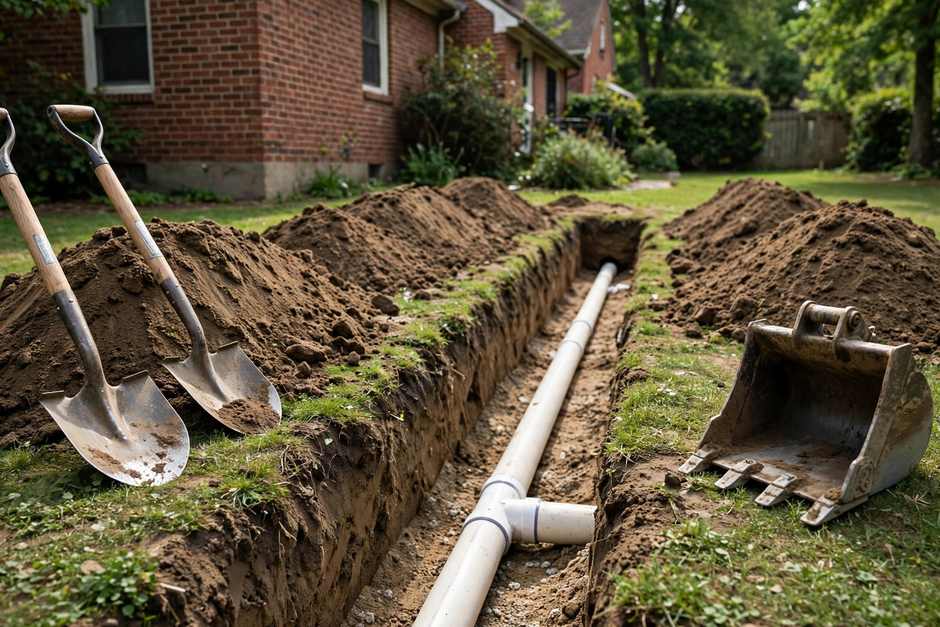
A damaged sewer line presents a choice between repairing the faulty section and replacing the line, and the right choice follows pipe condition rather than habit. Spot repair suits a localized fault in otherwise sound pipe, while replacement suits widespread failure along the run. Sewer line repair and replacement differ in extent, disruption, and the evidence needed before either begins. This guide states no prices and no ranges; the factors below shape scope, and any figure belongs in a written scope for the home in question.
Camera evidence decides the choice. A camera inspection shows the inside of the line, including cracks, offsets, root entry, bellies, and collapsed sections, and locates each defect along the run. Without that evidence, repair and replacement discussions rest on symptoms alone, which can hide the true extent of damage below ground.
Repair and Replacement at a Glance
Spot repair addresses a defined section of pipe, leaving the remainder of the line in place. The work opens or accesses the faulty section, replaces or restores that section, and reconnects it to sound pipe on either side. Spot repair carries narrower disruption than replacement, since most of the line, and the ground above it, stays untouched.
Replacement addresses the line as a whole, removing failed pipe and installing a new run from end to end. Replacement suits lines where faults appear along the length, where pipe material has reached the end of useful service, or where repeated spot repairs keep failing. The wider scope brings wider disruption, including excavation, surface restoration, and longer work duration in general terms.
How Camera Evidence Decides
Sewer camera inspection records video of the line interior, with footage marks showing where each defect sits along the run. Cracks, offsets, root entry points, bellies where water pools, and collapsed sections each appear distinctly on camera, and the pattern across the run shows whether damage is local or widespread. Written findings with footage give the homeowner a record to compare against any proposed scope.
Camera evidence also establishes position relative to the property line, which matters for ownership and program questions described below. A defect inside the property line and a defect beyond it fall under different responsibility, and camera locating shows which side holds the fault. Decisions made without camera evidence risk paying for the wrong section or the wrong method.
When Spot Repair Fits
Spot repair fits when camera evidence shows a single localized fault, such as one cracked section, one offset joint, or one root entry point, with the remainder of the line in sound condition. The surrounding pipe must hold joints and grade well enough to support the repaired section, since a repair joined to failing pipe will not hold. Sound remainder is the condition that makes spot repair sensible.
Access shapes spot repair feasibility as well. A fault beneath a lawn differs from a fault beneath a driveway, patio, or mature tree, where opening the ground carries heavier restoration. Trenchless spot methods can reduce surface disruption in some cases, subject to camera evidence and pipe condition. Access and restoration belong in the comparison alongside pipe condition.
When Replacement Fits
Replacement fits when camera evidence shows faults along the length of the line, including multiple cracks, repeated offsets, widespread root intrusion, or sections that have lost grade. A line that fails in several places will keep failing after any single spot repair, since each unrepaired fault remains in service. Replacement addresses the pattern rather than one point within it.
Collapsed sections, severe offsets, and bellies that hold standing water also point toward sewer line replacement rather than spot repair, because those defects change the shape and fall of the line. Sewer line replacement restores grade and alignment along the full run, which spot methods cannot achieve where the pipe shape itself has failed.
Trenchless Work as a Separate Approach
Trenchless methods address sewer lines with less surface excavation than open-cut work, using pipe bursting or lining techniques that work through access points. Pipe bursting replaces the old pipe by drawing new pipe through its path, while lining forms a new pipe inside the old one. Each method suits different pipe conditions, and neither fits every line.
Trenchless sewer repair does not suit collapsed pipe, severe offsets, or bellies, where the existing pipe cannot guide the new pipe or hold the liner shape. Camera inspection is the eligibility gate, showing whether the line holds enough shape for a trenchless method. Method choice follows camera evidence, access, and pipe condition together, not preference alone.
Ownership and the City Program in General Terms
The property owner owns the sewer lateral from the building to the city sewer main, including the portion running under streets, rights-of-way, or easements. The City of Belleville administers a Sewer Lateral Repair Program covering the portion of a defective lateral beginning just beyond the property line to the sewer main. Program terms change over time, so readers should check current City program details before relying on any program description.
The owner remains responsible for the portion from the building to the property line, and program participation follows a City process that starts with locating the break. Only the property owner may request participation, not a tenant, and the City may dye-test to confirm the break location. Establishing where the break sits relative to the property line, through camera evidence and the City process, comes before paying for any outer section.
When to Call and What to Ask
Call for help when backups recur, when several fixtures drain slowly together, when sewage odor persists, or when camera evidence from an earlier inspection shows defects needing action. Sewer work is restricted plumbing work under the Illinois Plumbing License Law (225 ILCS 320), and the homeowner exception covers single-family owner-occupant homes only. Sewer line work belongs with a plumber.
Ask what the camera footage shows, where each defect sits relative to the property line, whether spot repair, replacement, or a trenchless method fits the evidence, and what restoration the work involves. Ask how the City program process applies to the break location, and check current City program details directly. Written findings with footage keep the comparison grounded in evidence.
Frequently Asked Questions
How do repair and replacement differ for sewer lines?
Spot repair addresses a defined faulty section while leaving the remainder of the line in place, suiting localized faults in otherwise sound pipe. Replacement addresses the line as a whole, suiting widespread failure along the run. Camera evidence shows whether damage is local or widespread, which decides which approach fits.
Why does camera evidence matter before sewer work?
Camera inspection records the line interior and locates each defect along the run, showing cracks, offsets, root entry, bellies, and collapsed sections. That evidence separates local from widespread damage and establishes position relative to the property line. Decisions without camera evidence risk paying for the wrong section or method.
When does trenchless work fit a sewer line?
Trenchless methods, including pipe bursting and lining, fit lines that hold enough shape to guide new pipe or hold a liner, with camera inspection as the eligibility gate. Collapsed pipe, severe offsets, and bellies do not suit trenchless methods, since the existing pipe cannot guide the work. Method choice follows camera evidence and pipe condition.
Why does the property line matter for sewer laterals?
The owner owns the lateral from the building to the city main, while the City program covers the portion beginning just beyond the property line to the main, under current City terms. Camera locating shows which side holds the break. Establishing break position relative to the property line comes before paying for any outer section.
What should readers check about the City sewer program?
Readers should check current City program details directly, since program terms change over time and no program figure is stated here. The program covers the portion beyond the property line to the main, with a City process that starts with locating the break. Only the property owner may request participation, not a tenant.
Get Help With Sewer Line Repair or Replacement in Belleville
For help with sewer line repair or replacement in Belleville, Illinois, call Hinkle Plumbing Company at (618) 677-6556 during office hours, Monday through Friday, 8:00 AM to 4:30 PM. The office at 1610 W Main St, Belleville, IL 62220, is closed Saturday and Sunday. Describe backup patterns and any earlier camera findings.
Ask for camera evidence and written findings before choosing between repair, replacement, and trenchless methods. Check current City Sewer Lateral Repair Program details directly for the portion beyond the property line. Outside office hours, reducing water use limits load on a restricted line while waiting.