Common Plumbing Problems in Older Homes in Belleville, Illinois
Belleville holds many homes built decades ago, with pipe materials that reflect their era. This guide explains what to expect and check in older homes, from supply pipes to sewer laterals.
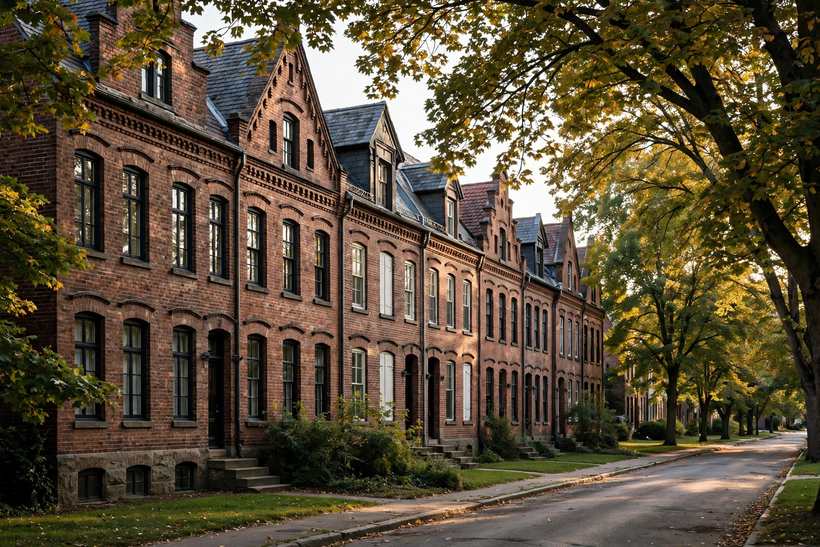
Belleville, Illinois, holds a large stock of older homes, and plumbing in those homes reflects the materials and layouts of the era when each home was built. Pipes, drains, and service lines age together, so a fault in one part often signals wear elsewhere in the system. Repiping enters the discussion when pipe condition across the home, rather than one joint, drives the decision.
American Community Survey 2020-2024 five-year estimates put the median year built for Belleville housing at 1962 to 1963, depending on source, with much of the stock built before 1980. Those citywide figures describe the stock as a whole, not any individual home. Build year for a given home, checked per address, shapes what pipe materials to expect and check.
Pipe Materials by Era: Expect and Check
Pipe materials follow era patterns that help frame expectations without deciding any individual home. Homes from before the 1950s may hold galvanized steel supply lines, cast iron drains, and clay sewer laterals, with a lead service line as a possibility to check. Homes from the 1950s and 1960s may hold galvanized or early copper supply lines with cast iron drains and clay laterals.
Homes from the 1970s and 1980s more often hold copper supply lines with cast iron or early PVC drains, while homes from the 1990s onward more often hold copper or PEX supply lines with PVC drains. Every statement here is era-typical expectation, not a verified fact for any house. Checking materials during diagnosis, rather than assuming them from build year alone, keeps the assessment honest.
Supply Pipes in Older Homes
Galvanized steel supply lines narrow over time as mineral deposits and corrosion build inside the pipe, reducing flow at fixtures and changing pressure patterns across the home. Copper supply lines corrode differently, with pinhole leaks and joint wear appearing as the system ages. Mixed-metal runs, where earlier partial work joined different materials, need transition fittings suited to both sides.
Flow and pressure signs help frame the check. Several fixtures running weak together, discolored water after periods without use, and repeated leaks along a run each suggest supply pipe condition beyond a single joint. A plumber assessing supply condition looks at material, age pattern, and failure history together before naming spot repair or wider work as the fit.
Drains and Sewer Laterals in Older Homes
Cast iron drains in older homes corrode and scale over time, narrowing the opening and roughening surfaces where debris catches. Clay sewer laterals, built with joints at intervals, admit tree roots through those joints as trees mature, and root intrusion is the expect-and-check pattern for older laterals. Sewer camera inspection shows drain and lateral condition directly, including scale, cracks, offsets, and root entry.
Belleville operates a mixed sewer system, with a combined-sewer historic core carrying sewage and rainwater in one pipe, and separate sanitary and storm systems in areas built later. No map of combined-sewer streets is stated here, since no current map was verified. Heavy rain can bring basement backups in combined portions, as the City itself states, and lateral condition shapes how each home fares.
Service Lines and Lead Checks
Service lines connecting homes to the water main reflect era patterns as well, and homes in the earliest era cohort carry the possibility of a lead service line to check. No count of lead lines in Belleville is stated here, and no home should be assumed to hold one from age alone. Checking service-line material is a per-address step, not a citywide assumption.
Illinois law addresses lead service line replacement and notification through the Lead Service Line Replacement and Notification Act, and Illinois American Water supplies drinking water in Belleville. Main water line replacement discussions for older homes should start with checking service-line material through the water provider inventory and replacement program. No cost claim is made here for any replacement route.
Historic Districts and Exterior Work
Local historic districts overseen by the Historic Preservation Commission include Old Belleville and Hexenbuckel, with district descriptions naming streets such as Abend Street and Garfield Street near Mascoutah Avenue, East Main Street, and North Illinois Street. Brick houses built close to the sidewalk, narrow lots, and brick streets shape access for exterior work in the oldest residential areas. A National Register district runs along the West Main Street corridor, with its own history and boundaries.
Inside a local historic district, exterior improvements require a Design Review Request through the Historic Preservation Commission. Whether a given plumbing job triggers that review is not established, so checking with the Commission before exterior work is the careful step. National Register listing alone carries different implications from local district designation, and the two systems should not be treated as one rule.
Added Bathrooms, Partial Repipes, and Mixed Materials
Older homes often hold layers of work from different eras, including added bathrooms, subdivided or converted spaces, and partial repipes that replaced one run while leaving others original. Each layer adds joints, transitions, and materials that later work must accommodate. A fault in one layer can hide wear in another, which is why assessment looks at the system as a whole.
Shutoff valves in older homes can seize or weep when turned after long disuse, and supply lines to added fixtures may follow paths that differ from original runs. Expect-and-check framing applies to every layer, since no layer can be assumed sound from appearance alone. Diagnosis that maps materials and layers before work begins prevents surprises once walls open.
When to Call About an Older Home
Call for help when flow weakens across fixtures, when leaks repeat along a run, when drains slow together, when sewer symptoms recur, or when service-line material needs checking. Plumbing work in Illinois is restricted under the Illinois Plumbing License Law (225 ILCS 320), and the homeowner exception covers single-family owner-occupant homes only. Assessment of older systems belongs with a plumber.
The City of Belleville requires a permit before plumbing work begins (§152.05(A)); direct replacement of a toilet, sink, faucet, or other appliance is exempt, except hot water heaters require an electrical or gas permit (§152.05(B)(3)). Wider work in older homes, including repiping and lateral work, carries permit and inspection context that belongs in the scope discussion. Camera evidence and material checks should precede scope decisions.
Frequently Asked Questions
What pipe materials appear in older Belleville homes?
Era patterns suggest galvanized steel, cast iron, and clay in the earliest cohorts, copper and early PVC in later cohorts, and copper or PEX with PVC in the newest homes. Every pattern is era-typical expectation, not a verified fact for any house. Checking materials during diagnosis keeps the assessment honest for the home in question.
How is a lead service line checked?
Checking service-line material is a per-address step through the water provider, Illinois American Water, and its service-line inventory and replacement program. No count of lead lines in Belleville is stated here, and no home should be assumed to hold one from age alone. Replacement discussions should start with that material check.
Why do older sewer laterals admit tree roots?
Clay sewer laterals were built with joints at intervals, and tree roots enter through those joints as trees mature. Root intrusion is the expect-and-check pattern for older laterals, shown directly by camera inspection. Camera evidence names root entry points, cracks, and offsets before repair or replacement scope is chosen.
Does historic district status affect plumbing work?
Inside a local historic district, exterior improvements require a Design Review Request through the Historic Preservation Commission. Whether a given plumbing job triggers that review is not established, so checking with the Commission before exterior work is the careful step. National Register listing carries different implications from local designation.
When does an older home need repiping rather than spot repair?
Repiping enters the discussion when pipe condition across the home drives the decision, including widespread corrosion, repeated leaks along a run, and mixed-material layers that keep failing. Spot repair fits a localized fault in otherwise sound pipe. Material checks and failure history together frame the choice for the home in question.
Get Help With Older Home Plumbing in Belleville
For help with older home plumbing in Belleville, Illinois, call Hinkle Plumbing Company at (618) 677-6556 during office hours, Monday through Friday, 8:00 AM to 4:30 PM. The office at 1610 W Main St, Belleville, IL 62220, is closed Saturday and Sunday. Note the home build year, known pipe materials, and any recurring faults.
Ask for material checks and camera evidence before scope decisions, and check service-line material through the water provider where lead is a question. Exterior work in a local historic district deserves a Design Review check with the Commission first. Outside office hours, shutoffs limit damage while waiting.